Denmark Plot Raises Alarm Over Direct Russian Threats
Denmark Plot Raises Alarm Over Direct Russian Threats
Russian threats in Europe are becoming “less and less hybrid,” European Commission President Ursula von der Leyen said after Danish authorities reportedly disrupted an alleged assassination plot involving a U.S.-Ukrainian citizen.
The case has intensified concern that Russian interference may be moving beyond cyberattacks, disinformation and covert political influence toward physical operations against individuals inside the European Union.
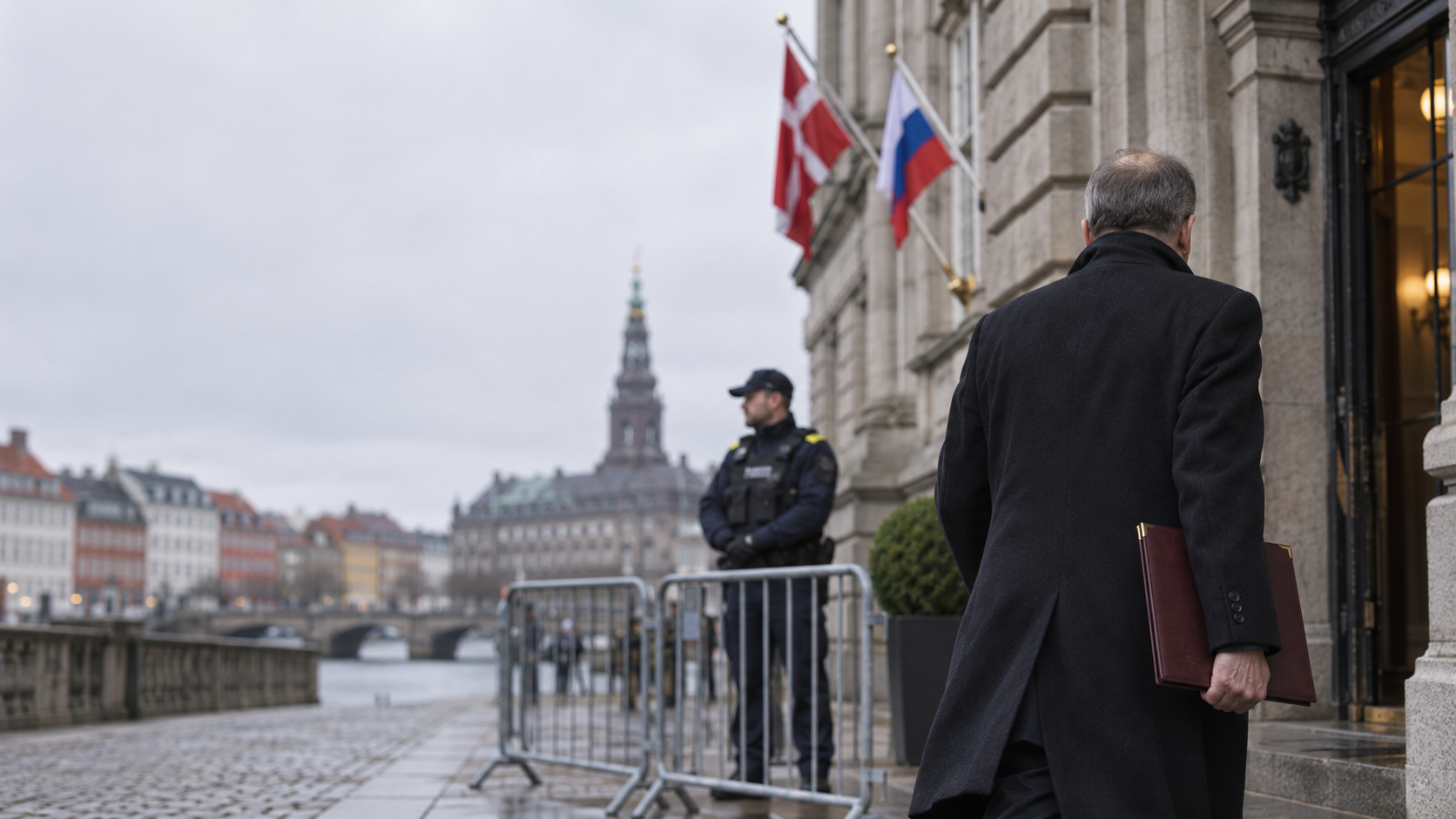
Reports say Denmark accused Russia of involvement in an alleged plan to kill a U.S.-Ukrainian rapper and planned to expel a Russian diplomat. Copenhagen also called for EU-wide travel restrictions on Russian nationals, seeking a coordinated response to what it described as a serious security threat (Source 1).
The allegations remain subject to investigation and verification. The available reports do not provide complete information about suspects, evidence, formal charges or court findings. Political attribution, investigative evidence and legally established responsibility are separate matters.
What Happened in Denmark?
Available reports describe an alleged plan to kill a U.S.-Ukrainian citizen in Denmark. One account identified the intended target as a U.S.-Ukrainian rapper. Danish authorities reportedly linked the operation to Russia and treated it as part of a wider security threat (Source 5).
The summaries do not establish who was arrested, whether anyone was charged, what evidence investigators obtained or whether a court has assessed the allegations. The incident should therefore be described as an alleged plot, not a proven assassination attempt.
The available material also does not identify the target, the planned attack’s date and location, the suspects or the methods allegedly considered. Those gaps limit any assessment of the operation’s scale and seriousness.
Denmark reportedly planned to expel a Russian diplomat over the alleged plot. Diplomatic expulsion is a serious political measure, but it is not a criminal conviction. Governments may remove diplomatic personnel because of suspected intelligence activity, logistical support, recruitment or other conduct, often without disclosing the underlying intelligence.
The available reports do not identify the diplomat, explain the formal grounds for expulsion or record Russia’s response. They therefore do not establish whether Denmark directly accused the diplomat of involvement or used the expulsion as a broader response to alleged Russian state activity.
Why the Case Matters Across Europe
An alleged operation in Denmark could have wider implications because foreign networks may operate across multiple jurisdictions. Recruitment, financing, communications and travel can involve several countries, while targets may have connections to Ukraine, the United States and European political or cultural communities.
The EU’s largely open internal travel area creates economic and social benefits but can complicate efforts to track suspected operatives. Denmark’s call for EU-wide travel restrictions reflects the argument that national measures may be insufficient when suspected networks cross borders (Source 1).
Von der Leyen’s “Less and Less Hybrid” Warning
Hybrid threats combine methods such as cyberattacks, disinformation, election interference, espionage, sabotage, economic coercion, proxy activity and pressure against critical infrastructure. These operations usually remain below the threshold of open armed conflict and exploit ambiguity to delay attribution and weaken a coordinated response.
European governments increasingly use the term to describe alleged Russian activity affecting information systems, political institutions and physical infrastructure. The EU has also described alleged Russian operations against member states as part of a broader pattern of covert interference (Source 7).
An alleged attempt to kill an individual would represent a more direct form of coercion than online influence or cyber disruption. Von der Leyen’s statement suggests concern that indirect methods may increasingly be accompanied by physical operations against people and institutions (Source 3).
The Denmark allegation does not independently prove a change in Russian strategy. The role of Russian authorities, the identity of any intermediaries and the operation’s purpose require confirmation.
A responsible assessment separates:
- Official allegations: What Danish authorities or European leaders say happened.
- Investigative evidence: Documents, communications, financial records, surveillance or testimony gathered by investigators.
- Court findings: What a court accepts after testing the evidence and hearing the defense.
- Unresolved questions: Facts that remain confidential, disputed or unavailable.
Reporting should therefore use formulations such as “Danish officials said,” “according to the reports” and “von der Leyen argued.” Russia’s responsibility should not be presented as legally proven without court records or authoritative investigations establishing it.
Europe’s Growing Concern Over Russian Interference
European governments have grouped alleged Russian activity into several security categories, including online influence campaigns, cyberattacks, intelligence collection, sabotage and political interference. An alleged assassination plot would extend that concern from institutions and information systems to individuals.
Potentially vulnerable groups include Ukrainian community leaders, dissidents, journalists, artists, activists, exiled opposition figures and public critics of Russia. Fear of physical retaliation could discourage public criticism, cultural activity or support for Ukraine.
The reported expulsion of a Russian diplomat is significant because diplomatic posts can provide official communications and access to a broad range of contacts. However, diplomatic status does not prove wrongdoing, and expulsion does not establish criminal responsibility.
Possible areas of European cooperation include:
- Intelligence sharing between national agencies.
- Protection for vulnerable individuals and communities.
- Monitoring suspected foreign agents.
- Cybersecurity and infrastructure protection.
- Joint analysis of recruitment and financing networks.
- Coordinated sanctions and diplomatic responses.
Effective policy must distinguish verified links to state activity from nationality alone. Broad measures that treat every Russian national as a security threat could be disproportionate and undermine public trust.
Denmark’s Push for EU-Wide Travel Restrictions
Denmark reportedly called for EU-wide travel restrictions on Russian nationals after the alleged plot (Source 1). The proposal reflects concern that suspected operatives could move between European countries while planning or supporting covert activity.
The available information describes a Danish demand, not an established EU measure. It does not show whether other governments supported the proposal or whether EU institutions adopted it.
A Europe-wide policy would need to address several questions:
- Would restrictions apply to all Russian nationals or only named individuals?
- What evidence would justify an entry ban?
- Would humanitarian, family, asylum or business exemptions apply?
- How could people challenge an incorrect designation?
- How would enforcement work across national systems?
Travel restrictions differ from asset freezes, visa limitations, sanctions against named individuals and diplomatic expulsions. Each measure has different legal requirements and consequences. Targeted restrictions based on documented conduct may be more proportionate than a blanket nationality-based policy, although they can be harder to administer and defend legally.
Potential Effects on European Security Policy
European agencies may strengthen efforts to identify foreign intelligence networks, intermediaries and recruitment channels. Governments may also reassess security for Ukrainian communities, dissidents, journalists, artists, activists and other public figures.
Possible measures include threat assessments, secure communications, protective policing and faster information sharing. These measures must remain lawful and proportionate. Excessive surveillance or indefinite emergency restrictions could undermine the civil liberties that European governments seek to protect.
An alleged assassination plan could be classified as hybrid activity if investigators establish state direction, proxy involvement and a political purpose. Depending on the evidence and legal framework, it could instead be treated as espionage, terrorism or an ordinary criminal conspiracy. Classification can affect sanctions, consultations among EU or NATO members, public communication and the scale of any response.
Authorities must respond to credible threats without overstating unproven allegations. Incorrect attribution can damage public trust, complicate prosecutions and escalate diplomatic tensions. Public explanations should distinguish confirmed facts from intelligence assessments and political interpretation.
What Remains Unclear?
The available summaries leave several important questions unanswered:
- Who was arrested or investigated?
- What evidence connected the alleged plot to Russia?
- Was a Russian diplomat directly implicated?
- What role did the target’s public profile play?
- Were formal charges filed?
- What response did Russia provide?
- Did other EU governments support Denmark’s proposal?
- Did the EU adopt new measures?
These details will determine whether the incident was a narrowly focused criminal case, a state-directed intelligence operation or part of a wider campaign. They will also affect the proportionality of any European response.
The case should be updated when Danish authorities release court documents, prosecutors announce charges, EU institutions clarify their position or Russia issues a formal response. Sources 1, 3, 5, 7 and 9 contain relevant summaries. Sources 2, 4, 6, 8 and 10 contain unrelated sports titles or insufficient information and should not be used as evidence.
Conclusion
Von der Leyen’s warning that Russian threats are becoming “less and less hybrid” reflects Europe’s concern that covert interference may be taking increasingly direct forms. The Denmark case has brought that concern into a concrete discussion about physical safety inside the EU.
Denmark reportedly investigated an alleged assassination plot, planned to expel a Russian diplomat and called for EU-wide travel restrictions on Russian nationals. The European Commission president condemned the alleged attempt and linked it to wider Russian security threats (Source 9).
The central test is whether European governments can accurately attribute covert activity, protect people at risk and coordinate counterintelligence while preserving legal standards. Russian responsibility should not be treated as legally proven unless later evidence confirms it.
Frequently Asked Questions
What did Ursula von der Leyen say about Russian threats?
Von der Leyen said Russian threats are becoming “less and less hybrid” after the alleged assassination plot in Denmark. Her comment suggests concern that Russian activity may be taking increasingly direct and physical forms (Source 3).
What was the alleged assassination plot?
Reports describe an alleged plan to kill a U.S.-Ukrainian citizen, identified in one summary as a rapper. The available information does not provide complete details about suspects, evidence, charges or court proceedings.
Why did Denmark plan to expel a Russian diplomat?
Denmark reportedly linked the expulsion to the alleged plot. Expulsion is a diplomatic response and does not, by itself, establish criminal responsibility. The diplomat’s identity and alleged role require confirmation from official sources.
What are hybrid threats?
Hybrid threats combine methods such as cyberattacks, disinformation, sabotage, espionage, political interference and proxy operations. They seek to pressure or destabilize a country without open conventional warfare.
What travel restrictions did Denmark seek?
Denmark reportedly called for EU-wide restrictions on Russian nationals after the alleged plot. The available summaries do not establish whether the EU adopted the proposal or define its scope.
Has Russia been proven responsible?
No. The available summaries describe accusations and official statements, not a final judicial determination. Political attribution, investigative evidence and court-established responsibility are separate stages.
Related Articles
-
 UN Talks on Autonomous Weapons End Without Agreement
-
 Drone Strike Reported on Russian Ship Near Finland
-
 EU Digital Tax Revived in Budget Negotiations
-
 Mexico Detains "El Chapo Isidro" as Sinaloa Violence Erupts
-
 Federal Jury Convicts Man in 2025 Palisades Fire
-
 Iowa Lead Dust Fears Challenge Army Detonation Plan
-
 The GOP’s Unlikely New Duo on Capitol Hill
-
 Russian Missiles in Poland: What Happened and NATO’s Options
-
 Did Trump Get Played by Putin and Xi?
-
 UN Talks on Regulating Killer Robots by 2028
-
 Denmark Expels Russian Official Over Alleged Hit Plot
-
 JD Vance Declines to Judge Iran Strikes
-
 Palisades Arson Retrial Ends in Federal Conviction
-
 Fiona the Hippo: Why the Swallowed Hat Stayed Put
-
 California Bar Reportedly Investigates Katie Zacharia
-
 Trump Raises Stephen Miller’s 2028 Presidential Prospects