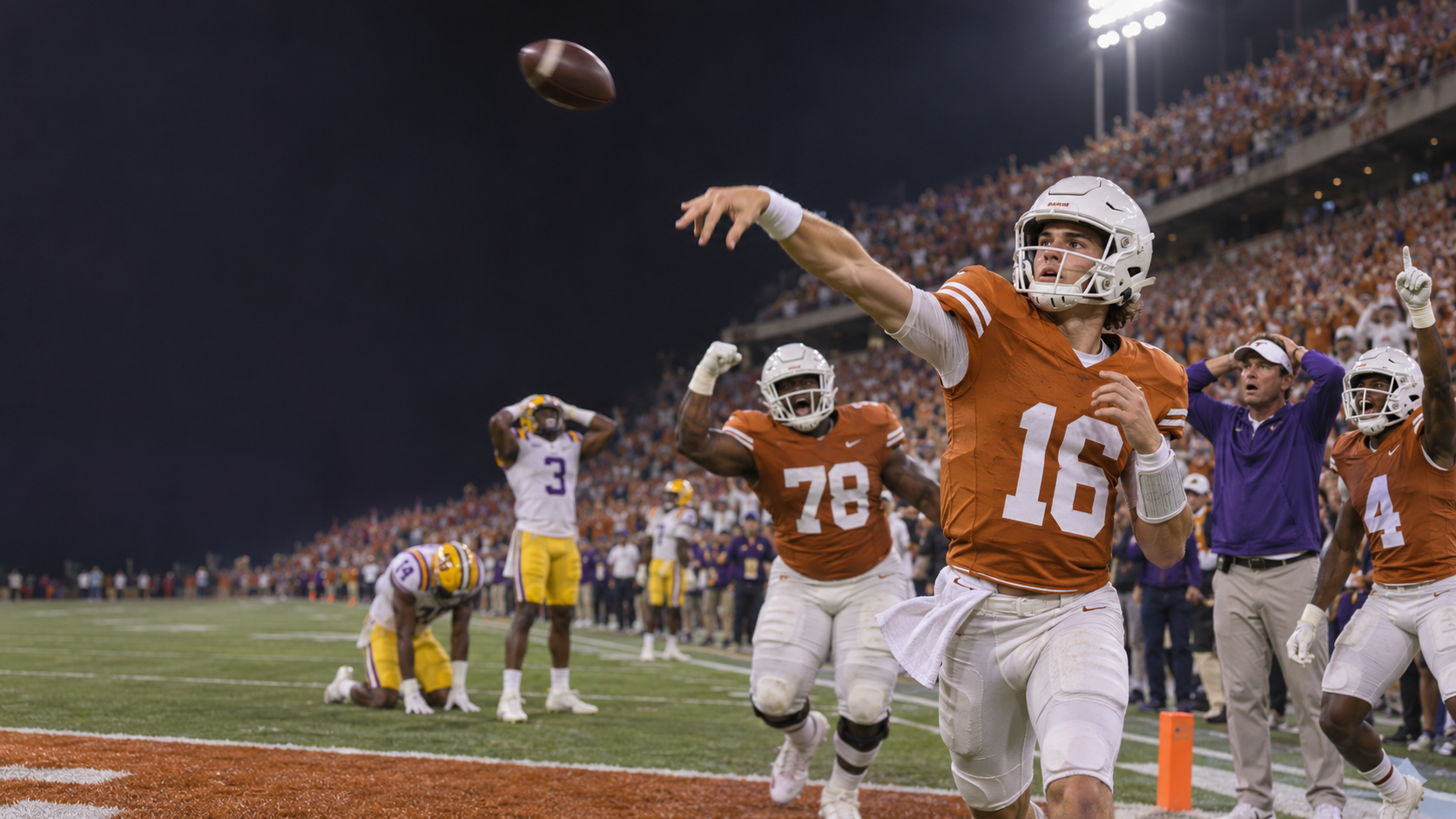
Arch Manning Leads Texas Past LSU After Three INTs
Arch Manning Overcomes Three Interceptions as Texas Beats LSU 22-21
Arch Manning endured one of the most uneven performances of his young career, throwing three interceptions before delivering the game-winning touchdown pass in Texas’ 22-21 comeback victory over LSU.
The result created two competing narratives. Manning’s turnovers raised legitimate questions about his decision-making and long-term NFL outlook. His late touchdown pass provided an equally clear counterpoint: despite a difficult stretch, he remained composed enough to make the decisive play when Texas needed it most.
Texas did not deliver a flawless performance. The Longhorns had to overcome costly mistakes, respond to pressure and execute late. LSU controlled important stretches and stayed close enough to win, but Texas completed the comeback and escaped with a one-point victory. 247Sports’ postgame analysis framed the rally as a result worth examining for its broader lessons about Texas’ resilience and execution.
Texas Completes a 22-21 Comeback
LSU Controlled Important Portions of the Game
LSU built enough of an advantage to put Texas in comeback mode. The Tigers were not overwhelmed, and the final score reflected a competitive game rather than a one-sided contest.
A 22-21 result leaves little room for error. Texas had to recover from its quarterback’s turnovers while LSU tried to protect its lead and prevent a late offensive surge. The narrow margin also gave added importance to individual decisions as the game progressed.
Manning’s three interceptions placed pressure on the rest of the Texas team. Turnovers can change field position, give an opponent momentum and force a defense to spend more time on the field. They can also disrupt offensive rhythm and make every later possession more important.
Texas could not erase the interceptions, but it could respond to them.
Texas Rallied When the Game Was on the Line
Texas turned a narrow deficit into a one-point victory by executing late. The comeback did not depend on avoiding every mistake. It depended on recovering after mistakes had already created a difficult situation.
That distinction defines the result. Texas did not win because its performance was flawless. It won because the team stayed within reach and produced enough late execution to change the outcome.
The comeback also gave Texas a meaningful resilience narrative. Teams that lose control after turnovers often allow one mistake to become a series of mistakes. Texas stayed competitive and created an opportunity for Manning to make the final decisive play.
Manning’s Three Interceptions Created Major Questions
Three interceptions are significant in any quarterback performance. They can affect more than the statistical line by changing field position, handing an opponent momentum and increasing the defense’s workload.
The interceptions gave critics a legitimate basis for questioning Manning’s decision-making against LSU. A quarterback expected to lead a major program must limit avoidable errors, especially in a close game when possessions carry increased value.
However, the available reports do not establish the precise cause of each interception. A fair assessment should not invent details about the intended receiver, coverage, pass location or protection. The confirmed facts are straightforward: Manning threw three interceptions, Texas remained in the game and Manning later threw the winning touchdown pass.
Fans Questioned Manning’s NFL Future
The three-interception performance triggered criticism from fans, including questions about whether Manning has an NFL future. NBC Sports also emphasized his ability to overcome the interceptions and throw the winning touchdown.
That reaction reflects the attention surrounding Manning, but immediate fan response is not the same as a long-term quarterback evaluation. One poor game can reveal weaknesses without settling a player’s professional outlook.
A broader evaluation would require evidence across multiple games and situations, including decision-making, accuracy, timing, pressure response, ball security, consistency and late-game performance.
The LSU game added both negative and positive evidence. The interceptions showed vulnerability. The winning touchdown showed that Manning could recover from adversity and remain capable of making a decisive throw.
The Interceptions Remain a Serious Concern
Texas’ comeback does not erase Manning’s mistakes. Winning the game and playing a mistake-free game are different achievements.
The balanced conclusion is that Manning’s performance was uneven. His three interceptions damaged Texas’ position and created legitimate concerns. His late touchdown pass helped overcome those problems and secured the victory.
The central developmental question is whether Manning can reduce damaging errors while preserving his ability to make high-value plays late. If the interceptions become a recurring pattern, they will weigh heavily in his evaluation. If he learns from them and improves his consistency, the LSU game may become evidence of growth rather than a defining weakness.
Manning’s Response Became the Story of the Game
He Did Not Let the Turnovers End His Performance
Continuing to lead after three interceptions presents a major mental challenge. Manning remained part of Texas’ late-game plan and produced the winning touchdown pass.
That response mattered because quarterback play influences the entire offense. Teammates must continue trusting the passer, coaches must continue calling plays that allow the offense to attack and the quarterback must maintain enough rhythm to execute in the most important moments.
The turnovers created the problem, but Manning did not disappear from the solution.
The Winning Pass Showed Late-Game Composure
Late-game quarterback performance receives heightened attention because the margin for error is smaller. There are fewer possessions, the score carries greater consequence and one decision can determine the result.
Manning’s winning touchdown pass showed that he could remain effective after a difficult earlier stretch. The play did not prove that every aspect of his game was under control. It did show that he could deliver when Texas needed a final offensive answer.
Composure in one finish does not eliminate the need for earlier improvement. Sustained success requires late-game confidence and better ball security throughout the contest.
What Texas’ Victory Says About the Team
Texas won despite a major quarterback setback, making resilience the primary team takeaway. The Longhorns stayed within striking distance and finished the comeback instead of allowing the turnovers to dictate the entire game.
The victory also highlighted Texas’ ability to finish. In a one-point game, a late completion, defensive stop or failure to convert can determine the result. Manning’s touchdown pass became the clearest example of Texas’ late execution.
The win does not remove Texas’ areas for improvement. Three interceptions indicate significant ball-security and decision-making issues during the game. Texas cannot rely on a late touchdown every week to overcome multiple mistakes. The team’s margin for error will improve only if it reduces turnovers and creates more consistent offensive possessions.
What the Loss Says About LSU
LSU scored 21 points and lost by one, showing that the Tigers were competitive against Texas and came close to securing a high-pressure victory.
The loss is more complicated than a simple failure. LSU placed itself in position to win, but Texas delivered the final offensive answer. The Daily Advertiser’s postgame grading report examined LSU after the dramatic defeat.
The confirmed conclusion is that LSU remained competitive but allowed Texas to produce the decisive late score. The result underscores the importance of late-game execution and defensive resistance in close contests.
Does This Game Change Arch Manning’s NFL Outlook?
Manning’s recovery from adversity and delivery of the decisive touchdown provide reasons for continued optimism. Quarterbacks face difficult stretches at every level, and the response matters.
At the same time, three interceptions remain a significant concern. NFL projections require consistent decision-making, not only one late winning play. Manning must show that he can protect the football, process pressure effectively and produce reliable performances across a larger sample.
The LSU game exposed weaknesses and demonstrated resilience. It did not settle Manning’s professional future or justify a definitive draft projection. That evaluation requires performances across multiple games, opponents and situations.
Conclusion
Texas beat LSU 22-21 after Arch Manning threw three interceptions and then delivered the game-winning touchdown pass.
The result validates Texas’ resilience, but the turnovers remain a serious concern. Manning’s response gives supporters evidence that he can maintain composure under pressure, while critics have legitimate reasons to demand better decision-making.
The LSU game may become a warning sign, a turning point or both. Future performances will determine whether Manning can reduce the mistakes that created the crisis while preserving the late-game playmaking that completed Texas’ comeback.
Frequently Asked Questions
How did Texas beat LSU?
Texas defeated LSU 22-21 in a comeback victory. Arch Manning threw the game-winning touchdown pass after Texas faced pressure from three interceptions.
How many interceptions did Arch Manning throw against LSU?
Arch Manning threw three interceptions in Texas’ win over LSU.
Did Arch Manning throw the game-winning touchdown pass?
Yes. Manning overcame the three interceptions and threw the touchdown pass that gave Texas the decisive lead.
What was the final score of Texas vs. LSU?
Texas beat LSU 22-21.
Did the game hurt Arch Manning’s NFL prospects?
The performance raised questions because of the three interceptions, but Manning’s game-winning touchdown pass also showed resilience and late-game composure. One game does not establish a definitive NFL projection.
What was the biggest takeaway from Texas’ win?
Texas completed a comeback despite costly turnovers. Manning’s response became the defining part of the victory, although his decision-making remains an important area for evaluation.