Ciryl Gane Edges Josh Hokit in UFC 334 Main Event
Ciryl Gane Edges Josh Hokit in UFC 334 Main Event
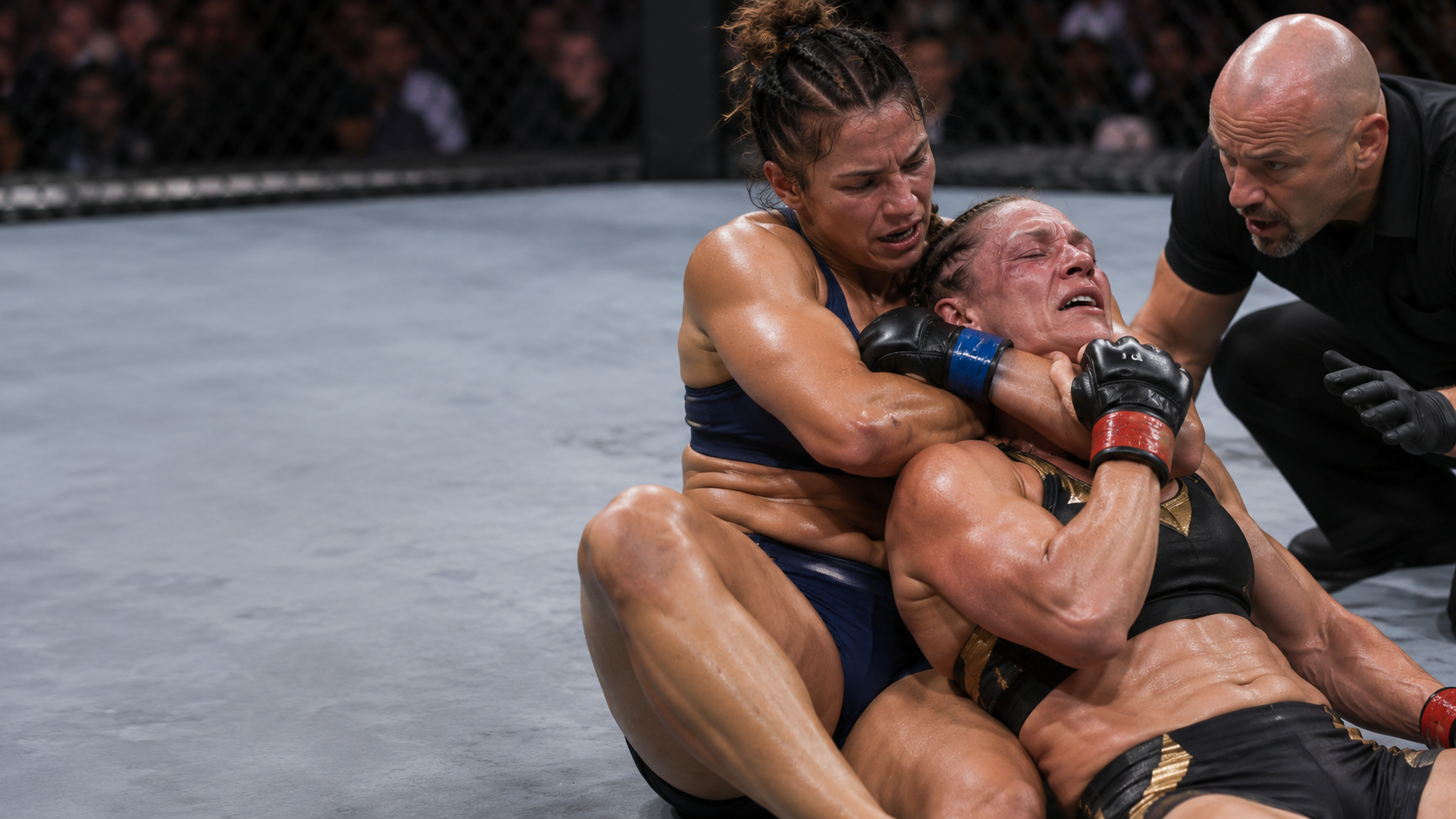
Ciryl Gane reportedly survived a furious opening from Josh Hokit before edging the challenger in the UFC 334 main event. Hokit applied relentless pressure early, but Gane regained control, became more effective as the fight progressed, and landed significant punishment late to retain his title.
The available reports describe a competitive fight rather than a dominant title defense. They do not provide verified round-by-round scorecards, complete statistics, knockdown totals, or the official decision type. The consistent account is clear: Hokit started quickly, Gane weathered the early assault, and the champion finished strongly.
Because the coverage reports the shape of the fight rather than reproducing an official scorecard, this account separates what the sources document from what they leave open. That distinction matters in a fight decided by narrow margins, where the difference between a dominant win and a competitive one often rests on details the summaries do not carry.
Hokit Sets a Fast Pace
Hokit immediately tried to disrupt Gane’s rhythm with an aggressive, sustained attack. That approach forced the champion to defend, react, and manage a difficult pace instead of establishing control from the opening bell.
An early surge can unsettle a champion by limiting time to establish distance and increasing the risk of absorbing clean offense. Hokit’s pressure shaped the early narrative and kept the title defense competitive.
The available summaries do not verify specific strikes, takedowns, knockdowns, or a near-stoppage. They support the broader conclusion that Hokit’s opening disrupted Gane and created immediate problems.
What Early Pressure Does to a Champion
A fast start works on two levels. Physically, it raises the pace beyond what the opponent prepared for, forcing reactions instead of planned offense. Strategically, it banks the early impression that judges and viewers carry into the rest of the fight.
For a titleholder, that creates a specific problem: the champion cannot simply wait, because waiting concedes rounds. Nor can the champion trade recklessly, because an exchange at the challenger’s preferred tempo favors the fighter who set it.
The reports frame Hokit’s opening in exactly those terms — urgency that forced Gane to manage the fight rather than dictate it.
Why the Opening Matters in a Close Fight
In a fight described as narrow, the earliest exchanges carry disproportionate weight. A challenger who wins the first minutes establishes that the champion can be pushed; the champion then needs visible, repeated success to reverse that impression.
That is the structural reason the supplied coverage treats Hokit’s start as significant rather than incidental. It gave the challenger a foundation, and it made Gane’s later work necessary rather than optional.
Gane Adjusts and Turns the Fight
Gane’s first priority was survival and composure. Rather than responding recklessly to Hokit’s urgency, he remained competitive through the difficult opening and gradually found more opportunities to control the contest.
The reports do not identify one confirmed turning point or a specific technical adjustment. They consistently describe a broader shift: Hokit’s early pressure gave way to Gane’s improved control and late effectiveness.
Gane’s late punishment strengthened his case for victory. It countered Hokit’s strong start, created a better closing impression, and showed that the champion’s performance involved more than simply enduring the early assault.
Composure as a Competitive Skill
Staying composed under pressure is not passive. It requires continuing to defend correctly, avoiding panic exchanges, and preserving enough output that the fight does not slip away while the storm passes.
That is the quality the reports attribute to Gane: he stayed in the contest through the difficult phase rather than conceding it outright. Source 5 describes him surviving Hokit’s frantic pace before landing decisive punishment late. Source 5
Late Offense as a Closing Argument
Late effectiveness does two things in a close fight. It changes the final impression, and it can convert rounds that were otherwise undecided. A champion who finishes strongly gives scorers a reason to resolve ambiguity in his favor.
The sources emphasize that late punishment consistently, which is why the result reads as a comeback rather than a routine defense.
Why the Victory Was Narrow
Hokit’s early success prevented Gane from controlling every phase of the fight. His activity and forward pressure forced the champion to work from the beginning and made individual exchanges more significant.
Gane’s strong finish improved his position, but it did not erase Hokit’s earlier success. In a scored fight, early control and late effectiveness must be weighed across the contest. Because the supplied material contains no official scorecards or decision margin, unofficial scoring should be avoided.
The reported result reflects changing momentum rather than one-sided control. Hokit supplied the urgency early, while Gane showed composure, adjusted, and finished with greater effectiveness.
How Scored Fights Weigh Early Control Against Late Damage
Under round-by-round scoring, each round is evaluated separately. A strong finish can win the rounds it occurs in; it does not retroactively change earlier rounds, even if it changes how the fight is remembered.
That means a narrow result usually reflects a split across phases: the challenger banked the early portion, the champion took the later portion, and the margin came down to how many rounds sat in between. The supplied reports describe precisely that distribution without specifying the count.
Why Unofficial Scorecards Are Withheld Here
Reconstructing a scorecard requires per-round detail the sources do not provide: who landed more, who controlled position, and how the closest rounds were read. Guessing at those inputs would produce a number that looks authoritative while resting on nothing.
The honest position is narrower: the fight was competitive, momentum shifted, and Gane’s late work was the difference described by every supplied account.
Gane Retains the Championship
Multiple supplied reports state that Gane defended or retained his title at UFC 334. The result highlights his ability to remain composed under pressure and recover when a challenger dictates the opening pace.
Championship performance is not limited to dominant wins. Based on the available summaries, Gane demonstrated resilience, patience, tactical adjustment, and late effectiveness. Hokit also enhanced his reputation by making the champion fight through difficult moments.
The available sources do not support predictions about Hokit’s next opponent, ranking movement, or an immediate rematch.
A narrow defense also carries information about durability at the top level. Champions who win only when everything goes according to plan are vulnerable; champions who win after losing the opening phase have shown a second route to victory. The reports place Gane’s performance in the second category.
Reported Media Reaction
The supplied coverage uses different wording but presents the same sequence:
- ESPN described Gane as surviving an early assault and narrowly winning. Source 1
- talkSPORT characterized the fight as a chaotic main event in which Gane survived a relentless challenge and retained the championship. Source 7
- Another supplied summary emphasized Hokit’s frantic pace and Gane’s significant late punishment. Source 9
The convergence is worth noting. Three separate outlets, using different language, describe the same arc: early pressure from Hokit, survival and adjustment from Gane, late damage from the champion. Where coverage diverges is in emphasis — “survived” and “narrowly won” in one account, “chaotic” in another, “punished him late” in a third — not in the underlying sequence.
Yahoo Sports also published an article titled “Jon Jones Reacts to Ciryl Gane vs. Josh Hokit Barnburner.” Source 3 The headline’s use of “barnburner” indicates an entertaining fight, but the supplied summary does not include Jones’s specific comments, so no direct opinion or quotation should be attributed to him.
Final Takeaway
Ciryl Gane reportedly edged Josh Hokit and retained his title after a difficult UFC 334 main event. Hokit’s aggressive start forced Gane into survival mode, but the champion stayed composed, adjusted, and delivered stronger late offense.
The fight’s central story is its momentum shift: Hokit controlled the early narrative, while Gane’s resilience and closing effectiveness secured the narrow victory. Exact scores, statistics, round-by-round details, and the official decision type require confirmation from a full official fight report.
What the sources establish is therefore a narrative of two halves rather than a single verdict on either fighter. Hokit’s performance argues that the gap at the top is narrow; Gane’s argues that experience and composure still decide close fights.
FAQ
Did Ciryl Gane win the UFC 334 main event?
Yes. The supplied reports state that Gane narrowly defeated Josh Hokit and defended his title. Source 1
How did Hokit start the fight?
He reportedly opened with a frantic, aggressive, and relentless pace that forced Gane to survive an early assault.
Did Gane dominate Hokit?
No. The available summaries describe a competitive fight. Hokit created significant early pressure, while Gane’s late punishment helped secure the narrow victory.
How did Gane turn the fight around?
The reports state that Gane survived Hokit’s early pressure, regained control as the fight progressed, and landed significant punishment late. They do not provide a verified technical sequence for the turning point.
Did Gane retain his championship?
Yes. Multiple supplied summaries state that Gane defended or retained his title at UFC 334. Source 5
Was the fight entertaining?
The Yahoo Sports headline refers to the bout as a “barnburner,” and talkSPORT described it as a chaotic main event. Those descriptions support the view that the fight was eventful, but the supplied summaries do not include detailed accounts of specific exchanges. Source 7
Are official scorecards or statistics available?
No. The supplied material contains no verified round-by-round scorecards, complete statistics, knockdown totals, or the official decision type. Those details require a full official fight report.
What did Jon Jones say about the fight?
Yahoo Sports published an article about Jones reacting to the fight, but the supplied summary does not include his specific comments. No direct opinion or quotation should be attributed to him without reviewing the full article.