Putin Rejects Limited Ukraine Ceasefire After Bridge Strike
Putin Rejects Limited Ukraine Ceasefire After Bridge Strike
Russia’s prospects for a limited ceasefire with Ukraine have become more uncertain after reports that President Vladimir Putin rejected negotiations following an attack on the Crimean Bridge.
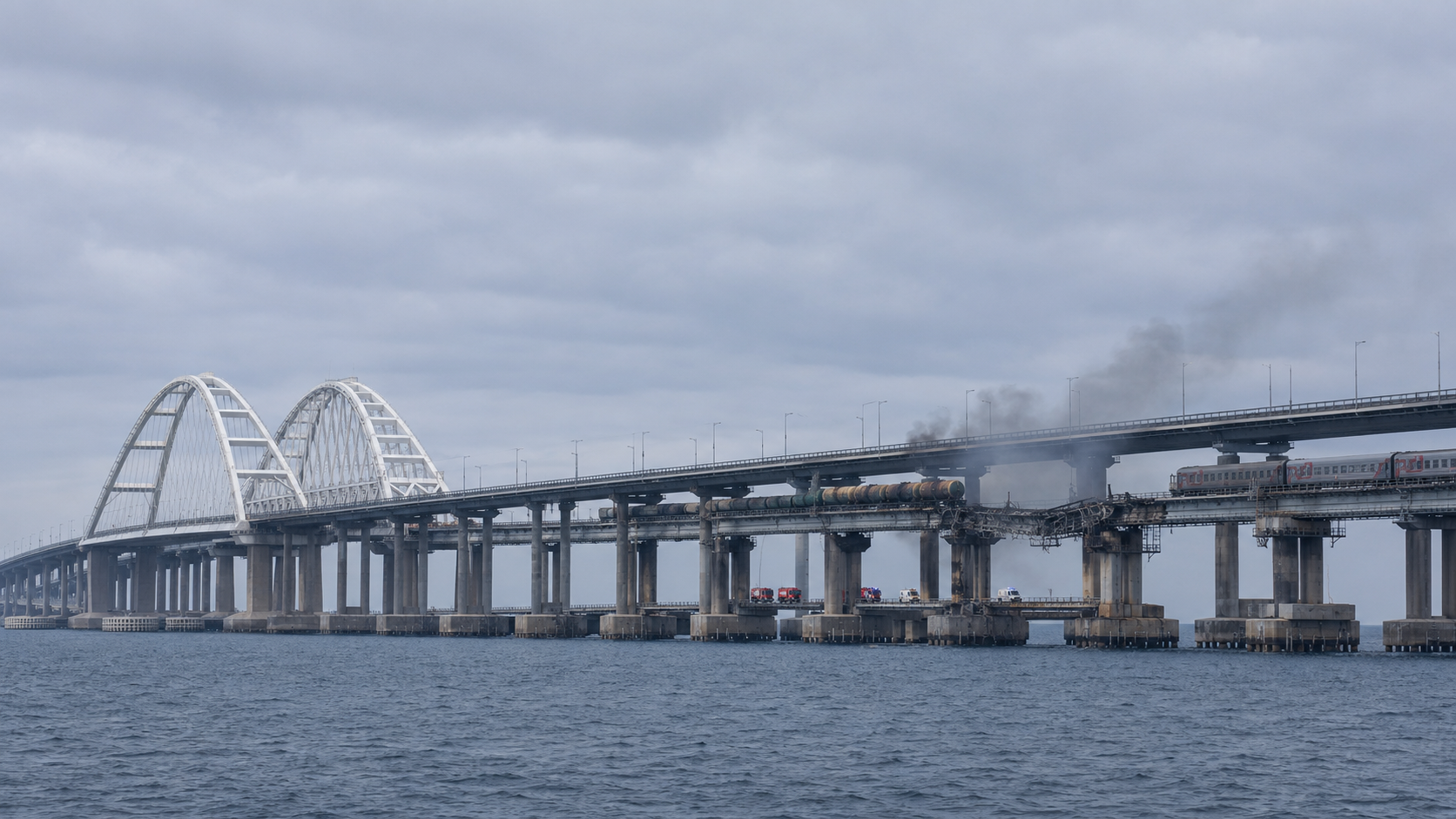
According to supplied reports from CBS News and other outlets, Putin said Russia would not negotiate a limited ceasefire after attacks on the bridge, which connects Crimea with Russia’s mainland. The reported position links a military incident directly to the future of ceasefire talks. Source 1
A limited ceasefire could involve a temporary pause in a specific area, a halt to attacks on certain infrastructure, or a short-term humanitarian arrangement. It would not necessarily resolve disputes over territory, sovereignty, security guarantees, or occupied areas.
The available reports do not include a complete transcript of Putin’s remarks or independently verify the weapon type, damage, or casualty figures. They also do not establish that all diplomatic contacts between Russia and Ukraine have ended.
What Putin reportedly said
Several supplied reports describe Putin as rejecting ceasefire negotiations after attacks on the Crimean Bridge. One report says Russia would not negotiate a limited ceasefire with Ukraine following the strike. Another says the attacks damaged prospects for ceasefire discussions. Source 7
The precise proposal Russia allegedly rejected remains unclear. Opposition to one limited ceasefire should therefore not be described as a definitive rejection of every future peace negotiation.
A ceasefire differs from a peace agreement. A ceasefire pauses or reduces fighting, while a peace agreement may address territorial control, sovereignty, military deployments, security guarantees, sanctions, reconstruction, and prisoner exchanges. Russia could oppose a temporary pause while continuing to claim support for a broader political settlement.
Reports about the Crimean Bridge
The Crimean Bridge is the central infrastructure site cited in the reports. NewsCord reported that Ukraine struck the bridge with Neptune missiles and that Russia suspended train traffic afterward. Source 5
Those details remain attributed to the report. The supplied material does not independently confirm the weapon type, the extent of damage, casualty figures, or the length and scope of any transport disruption. It also does not include a direct Ukrainian government statement accepting responsibility.
The bridge is significant both practically and politically. It connects Crimea with Russia’s mainland and can support the movement of equipment, personnel, fuel, and civilian supplies. It also symbolizes Russia’s claimed integration of Crimea, which Ukraine regards as its sovereign territory.
Impact on ceasefire prospects
The reported rejection suggests that Moscow is unwilling, at least for now, to separate ceasefire discussions from attacks on strategic infrastructure. Russia may argue that negotiations are difficult while Ukrainian forces target routes that Moscow considers essential to security or military logistics.
Russia could also fear that a pause would allow Ukraine to repair infrastructure, regroup forces, conduct reconnaissance, or prepare additional operations. These are analytical possibilities, not confirmed statements of Russian policy. The supplied reports do not specify all conditions Russia would require before entering negotiations.
Ukraine may view attacks on the bridge as part of an effort to disrupt Russian logistics and challenge Russian control over Crimea. Kyiv could also regard a ceasefire that leaves Russian forces supplied and entrenched as insufficient. The source summaries do not establish whether Ukraine formally proposed, accepted, or rejected a specific limited ceasefire.
A bridge strike followed by a firm rejection of talks could reduce room for compromise. Potential risks include retaliatory attacks, expanded strikes on transport networks, pressure on energy systems, and the suspension of indirect diplomatic contacts. The supplied sources do not document specific retaliation linked to this incident.
Putin’s position and Trump’s peace assessment
A separate supplied report says President Donald Trump described Putin as wanting peace in Ukraine, despite reports that Putin supported continuing the war. Source 3
These statements are not necessarily incompatible. Trump’s comment concerns Putin’s broader intentions, while the reported Russian position concerns a specific ceasefire arrangement and its conditions. A leader can support an eventual settlement while opposing a temporary pause viewed as unfavorable.
The practical questions remain more important than general statements about peace:
- What conditions does each side require?
- What areas and activities would a ceasefire cover?
- Would military resupply and reconnaissance continue?
- How would violations be monitored?
- What would happen when the pause expired?
Until these issues are addressed, public statements provide limited evidence that negotiations can begin.
What is confirmed and what remains unclear?
Multiple supplied summaries report that Putin rejected or ruled out ceasefire discussions after attacks on the Crimean Bridge. They also identify the incident as a major factor affecting the prospects for a limited ceasefire. Source 9
The following claims should remain attributed rather than presented as independently verified:
- Ukraine used Neptune missiles.
- Russia suspended train traffic.
- The bridge suffered specific operational or military damage.
- The attack directly ended a formal negotiation process.
- Putin rejected every possible form of future peace talks.
The supplied reports do not provide the exact date and time of Putin’s remarks, a full transcript, Ukraine’s official response, confirmed damage or casualty figures, the details of any ceasefire proposal, or evidence of retaliation directly linked to the incident.
What could allow talks to resume?
Any future limited ceasefire would need clear terms covering its geographic scope, duration, military resupply, drones, reconnaissance, air defense, civilian transport, humanitarian access, and the definition of a violation.
Both sides would also need a credible monitoring and enforcement mechanism. International organizations or third-party monitors could potentially assist, although the supplied reports identify no specific arrangement.
Russia may seek assurances that a pause would not be used to prepare new attacks or weaken its control over territory and infrastructure. Ukraine may seek guarantees against continued attacks and recognition of its sovereignty. These demands extend beyond a narrow ceasefire and reach the broader political dispute at the center of the war.
Conclusion
Putin reportedly rejected negotiations on a limited ceasefire with Ukraine after attacks on the Crimean Bridge. The reported decision links a major infrastructure incident to Russia’s diplomatic position and makes near-term ceasefire talks more difficult.
Reports that Russia suspended train traffic add a practical dimension to the dispute, while claims that Ukraine used Neptune missiles remain attributed rather than independently verified. Trump’s assessment that Putin wants peace does not necessarily conflict with opposition to a specific truce: support for an eventual settlement does not require acceptance of every ceasefire proposal.
The available reports do not establish the full details of the bridge strike, the precise terms of any ceasefire proposal, or the complete status of peace negotiations. The central question is whether future diplomacy can separate temporary arrangements from disputes over territory, security, infrastructure, and military operations.
Frequently Asked Questions
Did Putin reject a ceasefire with Ukraine?
According to the supplied reports, Putin said Russia would not negotiate a limited ceasefire with Ukraine after attacks on the Crimean Bridge. The summaries do not establish that he rejected every possible future peace negotiation.
What happened to the Crimean Bridge?
The reports say the bridge was targeted and that Russia suspended train traffic afterward. One report attributed the strike to Neptune missiles, but the available summaries do not independently verify the weapon type, damage, or casualty figures. Source 5
Did Ukraine claim responsibility?
The source summaries describe the incident as a Ukrainian strike, but they do not provide a direct Ukrainian government statement confirming responsibility. The claim should remain attributed until supported by an official source.
What is a limited ceasefire?
A limited ceasefire is a temporary pause in fighting that applies to a particular area, activity, or period. It differs from a comprehensive peace agreement addressing territory, sovereignty, security guarantees, and the broader causes of the war.
Does Putin’s position mean peace talks are over?
Not necessarily. The reports indicate opposition to a specific limited ceasefire after the bridge strike. They do not prove that all diplomatic contacts or future peace negotiations have ended.
Why is the Crimean Bridge important?
The bridge connects Crimea with Russia’s mainland and carries strong political symbolism. An attack can affect transport, logistics, security perceptions, and the wider dispute over control of Crimea.
Related Articles
-
 Trump-Putin-Xi Summit: Ukraine and Nuclear Deal Hurdles
-
 Israeli Spy Chief Urged U.S. Strikes Against Iran
-
 Will Muslims Outnumber Christians by 2035?
-
 Senate Rejects Bid to Limit Trump’s Iran War Powers
-
 Iowa Army Detonation Raises Lead-Dust Concerns in Illinois
-
 Fiona the Hippo Dies Days After Eating Visitor’s Hat
-
 New Video Shows Deadly Brooklyn Building Collapse
-
 Democrats Nominate Hakeem Jeffries for Speaker
-
 Trump, Putin and Xi Reportedly Issue Peace Declaration
-
 Third Ukrainian Strike Disrupts Rail Traffic on Kerch Bridge
-
 ICJ Has Not Yet Ruled Myanmar Committed Genocide
-
 PIF Headquarters in Riyadh Reportedly Damaged
-
 Elon Musk Distances Himself From Trump’s MAGA Brand
-
 Mamdani’s Central Park Horse-Carriage Ban Explained
-
 Kirkland Reportedly Provided $11.8M in Free Legal Work
-
 Republican Trifecta Loses Momentum in Final Days