Senate Rejects Bid to Limit Trump’s Iran War Powers
Senate Rejects Bid to Limit Trump’s Iran War Powers
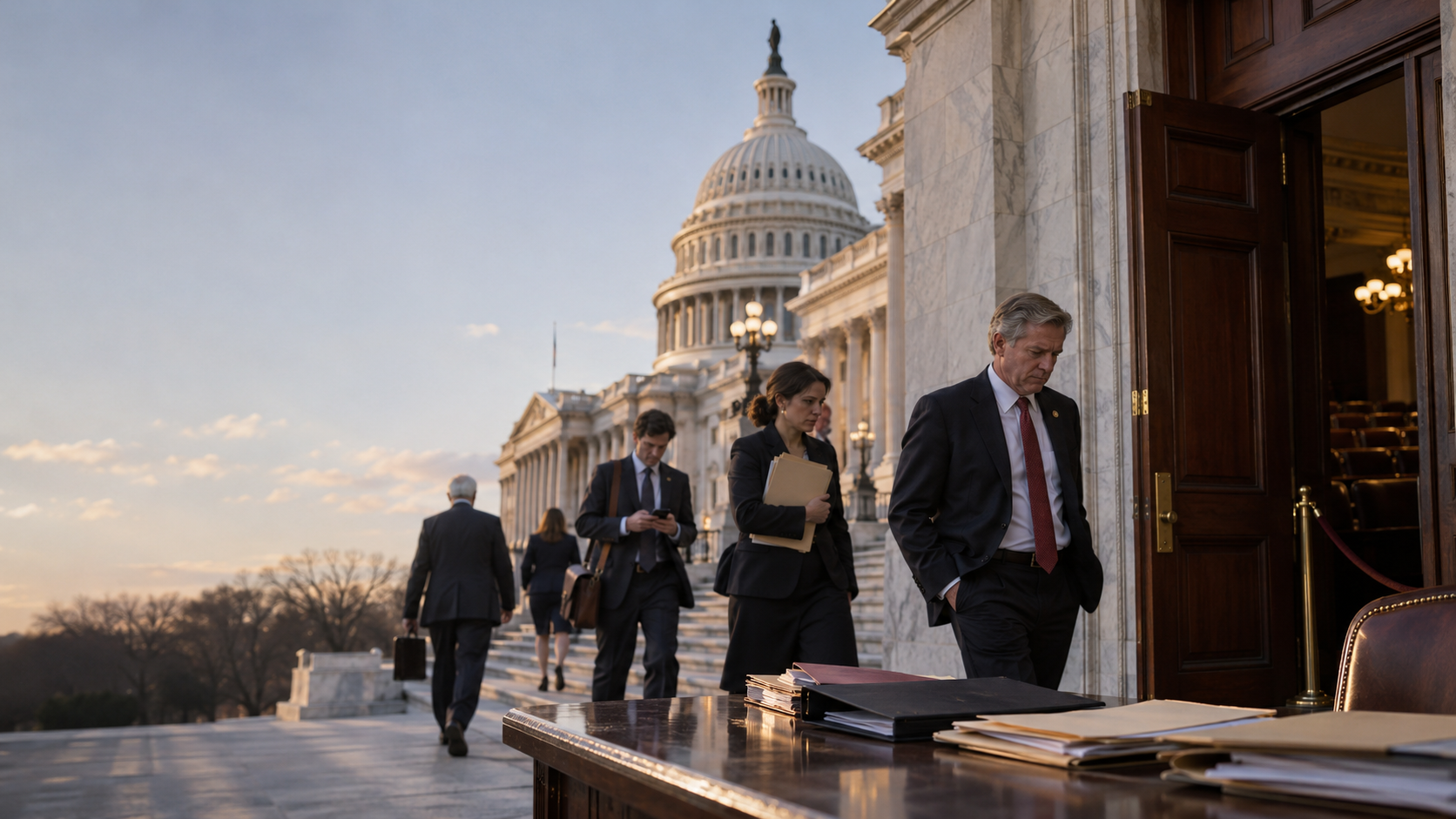
The Senate rejected a resolution intended to restrict President Donald Trump’s ability to launch or continue military action against Iran without additional congressional authorization.
The vote did not authorize a new attack, declare war, or approve every possible future military operation. It rejected a specific legislative effort to limit presidential action.
The immediate effect was to preserve broader room for the administration to respond to Iran-related threats. The Guardian described the outcome as giving Trump greater discretion over military action against Iran, while other coverage presented the vote as a test of Congress’s role in decisions involving war and national security. Source 7
What the Senate Rejected
A war powers resolution is a congressional effort to assert authority over the use of U.S. military forces. In this case, the proposed measure sought to block or restrict Trump from launching or continuing military action against Iran without further authorization from Congress.
Such a measure could have prevented a future operation, required an existing operation to end, demanded a separate authorization for military force, established reporting requirements, or restricted funding for specified activity.
The available source summaries do not identify the final resolution number, complete text, or exact operative language. Those details should be confirmed through the official Senate roll call and Congressional Record. The measure should not be described as a declaration of war, an automatic withdrawal order, or a blanket prohibition unless its final text supports that description.
The Senate’s rejection means that the proposed restriction did not advance. Trump therefore did not face the additional limitation sought by supporters of the measure. That result does not give the president unlimited authority. Existing federal statutes, constitutional restrictions, funding decisions, military rules of engagement, congressional oversight, and potential judicial review may still apply.
Why the Vote Mattered
The vote tested the balance between executive military authority and congressional oversight. Military action against Iran could trigger retaliation against U.S. forces, attacks by aligned armed groups, disruption to commercial shipping, or a wider regional conflict.
The debate also involved economic and diplomatic risks. Escalation could affect energy markets, shipping, and relations with U.S. allies. A measure limiting presidential authority therefore represented more than a procedural dispute. It addressed whether Congress should place a formal barrier between the president and future military action.
The failed vote does not resolve the underlying constitutional question: how far may a president act militarily without a new vote in Congress? Supporters argued that major or sustained hostilities should require congressional approval. Opponents argued that the president must retain flexibility to protect U.S. personnel, respond to attacks, and deter further threats.
Party Divisions and the Vote’s Procedural Significance
The available summaries do not provide the final vote tally, resolution number, or complete roll call. Those details are essential for determining whether the measure attracted bipartisan support or followed a largely party-line pattern.
A complete account should identify:
- The exact resolution number.
- The number of senators voting for and against it.
- Whether the vote was procedural or final.
- The threshold required for passage.
- Any senators who crossed party lines.
- Whether the measure could return in revised form.
A vote to advance debate has a different meaning from a final vote on passage. The official Senate record should control the description.
John Fetterman’s Reported Break With Democrats
Newsweek reported that Senator John Fetterman broke ranks with Democrats during an effort to end the Iran war. Source 3
His precise reasoning should be based on his public statement and the official roll call. Possible explanations include support for presidential authority, national-security concerns, opposition to the resolution’s timing, or disagreement with its scope. Those possibilities should not be presented as established facts without direct evidence.
Fetterman’s position matters because narrow margins can make individual votes decisive. A senator crossing party lines can also reveal disagreement over military intervention and congressional control of foreign policy. Future votes on funding, oversight, or a formal authorization for military force could expose similar divisions.
Arguments Against the Resolution
Opponents may argue that the president needs the ability to respond rapidly to threats. A military response can require decisions within minutes or hours, particularly when U.S. personnel, aircraft, ships, or bases face attack.
The argument for presidential flexibility generally rests on several points:
- The president must protect U.S. service members.
- Military leaders need clear authority during a crisis.
- Public congressional debate could reveal sensitive information.
- Iran or affiliated groups could exploit delays.
- A credible threat of force may deter attacks.
Supporters of presidential authority may also argue that requiring a new congressional vote for every operation would weaken deterrence and encourage Iran to test U.S. limits.
Opponents may further contend that the measure was premature, too broad, or disconnected from a specific military operation. A resolution addressing a possible future strike raises different questions from one responding to an attack that has already occurred.
The wording determines the practical effect. A narrow measure could address one operation or category of hostilities. A broad measure could affect defensive action, intelligence support, regional deployments, or operations against groups aligned with Iran. Without the final text, its precise legal effect cannot be determined.
The administration’s national-security case may involve Iran’s nuclear capabilities, attacks on U.S. forces, threats to regional infrastructure, risks to shipping, and support for armed groups. Such claims require attribution to officials, intelligence assessments, or other documented sources. Serious threats may support arguments for rapid presidential action, but they do not by themselves resolve the constitutional question.
Arguments for the Resolution
Supporters argued that Congress should decide whether the United States enters or continues a major conflict. The Constitution gives Congress authority to declare war and control federal spending, while the president serves as commander in chief.
The boundary between those powers has remained disputed. Presidents have claimed authority to conduct limited military operations without a declaration of war. Congress has argued that sustained or significant hostilities require legislative approval.
The dispute becomes sharper when an operation could expand beyond a limited defensive response. A strike against Iran could lead to retaliation, additional deployments, and a continuing exchange of attacks. Supporters may therefore view congressional approval as necessary to establish objectives, limits, and an exit strategy.
Supporters may also fear that rejecting the measure would enable an expanding conflict without clear public accountability. Their concerns could include:
- A wider regional war.
- Additional U.S. casualties.
- Unclear military objectives.
- Long-term troop deployments.
- Retaliatory attacks against U.S. interests.
- Higher energy and transportation costs.
- Limited congressional oversight.
The central argument is not necessarily that the United States can never use force. It is that a major or continuing conflict should receive an explicit congressional vote rather than proceed through executive action alone.
The War Powers Resolution Debate
The War Powers Resolution of 1973 was designed to increase congressional involvement when U.S. forces enter hostilities or face circumstances that could lead to hostilities. It established consultation and reporting procedures and created a framework for congressional action.
Its interpretation remains disputed. Key questions include:
- What qualifies as “hostilities”?
- When must the president notify Congress?
- Does a limited strike trigger the law?
- When does a withdrawal deadline apply?
- Can Congress compel an end to military action?
- What legal effect does a war powers resolution have?
Presidents and members of Congress have disagreed over these issues for decades. Courts have often avoided broad rulings when cases raise standing or political-question concerns.
What the Rejection Means for Trump’s Authority
The failed vote leaves Trump with greater discretion to direct or threaten military action against Iran, according to the supplied Guardian summary. Source 7
The administration may face less immediate pressure to seek a new congressional vote before responding to a developing threat. That could provide flexibility in protecting troops, responding to attacks, and adjusting military deployments.
Broader discretion is not unrestricted power. The administration may still face statutory limits, funding conditions, military rules of engagement, internal legal review, congressional investigations, and judicial challenges.
Rejecting a limitation is also not the same as authorizing military force:
- Rejecting a limitation: Congress declines to impose the proposed restriction.
- Authorizing force: Congress affirmatively grants legal authority for specified military action.
- Approving an operation: Congress endorses a particular mission or strike.
The Senate vote did not automatically approve every future operation against Iran. Each action could raise separate questions about its purpose, duration, scale, and legal basis. The vote may affect military planning and deterrence calculations, but it does not establish that a strike will occur.
What Congress Can Still Do
Congress retains several tools after rejecting the resolution:
- Introduce a revised war powers resolution.
- Pass an authorization for military force with specific limits.
- Prohibit or condition funding.
- Require reports and legal explanations.
- Hold public or classified hearings.
- Request briefings from administration officials.
- Investigate military planning and intelligence.
- Use appropriations legislation to influence operations.
Each tool has different procedural requirements and political prospects. Funding restrictions may face a presidential veto. Hearings can create public pressure but may not immediately change policy. A new resolution could gain support if military action expands.
A military operation could also produce litigation over executive power. Courts might examine whether plaintiffs have standing, whether the dispute is suitable for judicial review, and whether a concrete injury exists. They could avoid deciding the broader constitutional question if a case fails on procedural grounds.
Political Consequences
Fetterman’s reported break with Democrats highlights disagreement within the party over military intervention, presidential authority, and congressional oversight. Democrats may differ over whether restricting Trump strengthens constitutional accountability or weakens national security during a crisis.
The vote should not be treated as proof of a uniform party position. Future debates may divide lawmakers according to their views of Iran, presidential power, military risk, and the wording of proposed legislation.
Republicans may present the result as support for national security, presidential leadership, or deterrence. If the official roll call shows Republican dissent, that division would also be significant. Republicans could disagree over the size of a military response, the need for congressional approval, or the risk of a prolonged conflict.
The Washington Post has reported that incumbent parties often face disadvantages in midterm elections and that high energy prices can increase political pressure. Source 9
An Iran conflict could affect public opinion through fuel prices, military casualties, economic uncertainty, and perceptions of presidential leadership. The political impact would depend on the conflict’s duration, intensity, and consequences. The Senate vote alone will not determine election outcomes.
International and Regional Implications
Iran may interpret the Senate vote as evidence that Trump faces fewer immediate congressional constraints. That perception could affect diplomatic and military calculations. Possible responses could include diplomatic warnings, changes in regional deployments, pressure through aligned groups, or efforts to negotiate. No specific response should be treated as confirmed without official statements or reliable reporting.
Israel, Gulf governments, European states, and other regional partners may assess the vote differently. Some could view greater presidential flexibility as stronger deterrence. Others could see it as increasing the risk of escalation or making U.S. policy less predictable.
Allies may also focus on whether the United States has a clear objective and a credible plan for limiting the conflict. Their positions will likely depend on Iran’s actions and the administration’s public strategy.
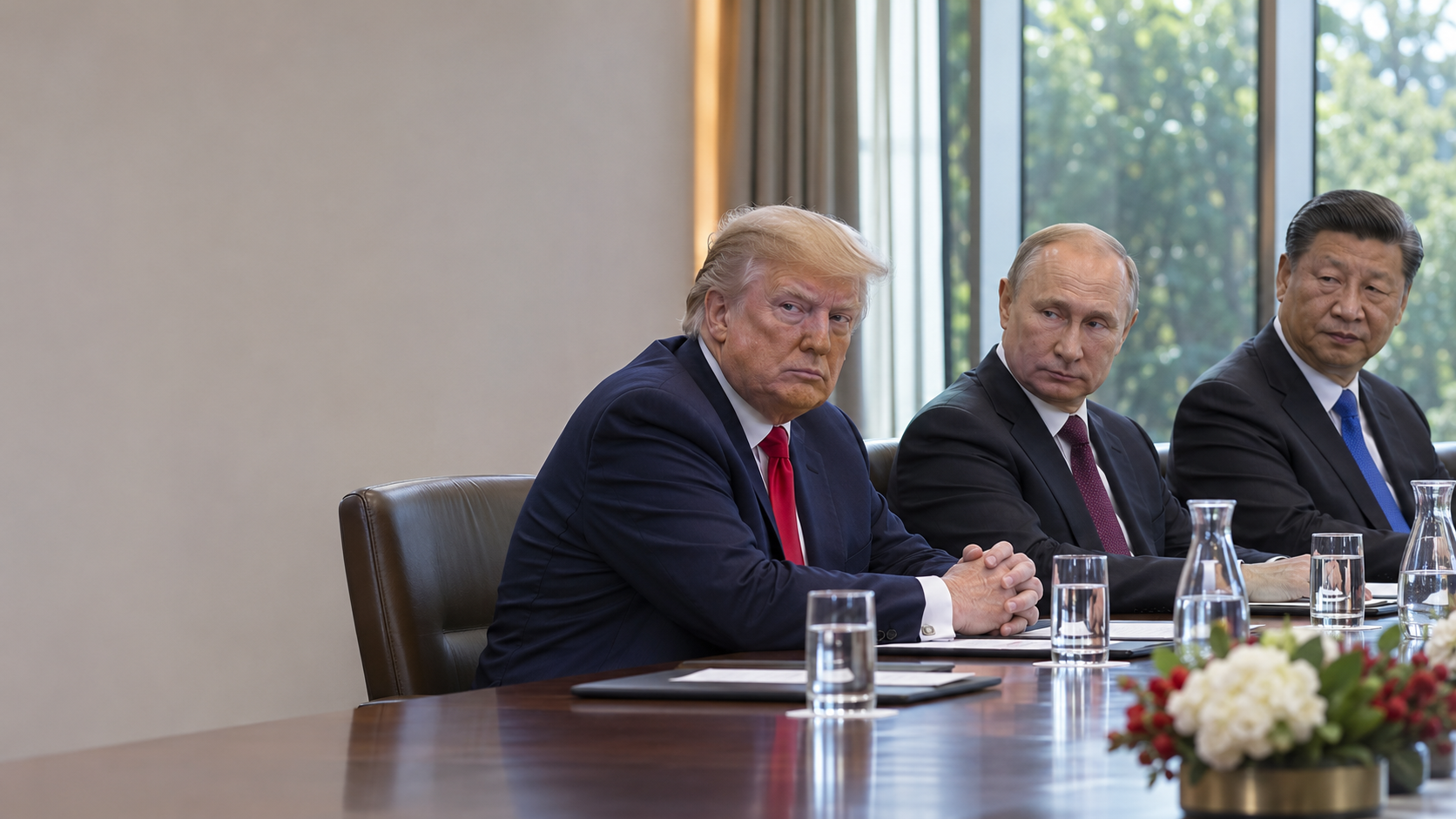
The Washington Post also discussed Trump’s meetings with Chinese President Xi Jinping and Russian President Vladimir Putin alongside other major developments. Source 5 Those meetings provide broader diplomatic context, but the available summary does not establish that they caused or determined the Senate outcome.
What Happens Next
Congress could consider a revised war powers resolution, a formal authorization for military force, hearings on the administration’s legal rationale, classified intelligence briefings, funding amendments, reporting requirements, or investigations into military planning.
The House and Senate may pursue different strategies. A measure could pass one chamber but fail in the other, or face a presidential veto.
Trump may retain the ability to order or threaten military action, subject to legal, operational, and strategic constraints. Future decisions will depend on Iran’s conduct, attacks on U.S. personnel, intelligence assessments, diplomatic negotiations, and the president’s stated objectives.
Readers should monitor White House statements, Pentagon announcements, congressional roll calls, hearing schedules, statements from Iranian officials, reactions from U.S. allies, energy prices, shipping conditions, court filings, and any published legal justification for military action.
Conclusion
The Senate rejected an effort to restrict Trump’s authority over military action against Iran. The vote preserved broader presidential discretion but did not provide unlimited authority or affirmatively authorize every future strike.
The constitutional dispute remains unresolved. Congress retains control over funding, legislation, oversight, and future war powers measures. The reported break by John Fetterman also shows that the issue does not divide lawmakers solely along simple party lines.
The next major question is whether Congress will attempt another restriction if military action expands or continues. The central distinction remains unchanged: rejecting a limitation is not the same as authorizing war.
Frequently Asked Questions
What resolution did the Senate reject?
The Senate rejected a war powers resolution intended to limit President Donald Trump’s ability to launch or continue military action against Iran without additional congressional authorization. The available summaries do not provide the final resolution number or complete text.
Does the Senate vote authorize Trump to strike Iran?
No. Rejecting a measure to limit presidential authority is not the same as passing an authorization for military force. The vote leaves Trump with broader discretion, but constitutional provisions, federal statutes, funding decisions, military rules, and other constraints may still apply.
Why did John Fetterman break with Democrats?
Newsweek reported that Senator John Fetterman opposed the Democratic effort to end the Iran war. Source 3 His exact rationale should be based on his public comments and the official vote record. Possible factors include national security, presidential authority, and disagreement with the resolution’s timing or scope.
What is the War Powers Resolution?
The War Powers Resolution is a 1973 federal law intended to increase congressional oversight when U.S. forces enter hostilities or face circumstances that could lead to hostilities. Its interpretation remains disputed, particularly regarding the definition of hostilities, presidential reporting duties, and congressional authority to require withdrawal.
Can Congress try to restrict Trump’s Iran authority again?
Yes. Congress could introduce another war powers resolution, seek a specific authorization for military force, restrict funding, require reports, or conduct oversight hearings. The prospects would depend on the wording, vote margins, and military developments involving Iran.
What could happen after the Senate vote?
The administration may retain greater flexibility in responding to Iran-related threats, while lawmakers may continue challenging the policy through legislation and oversight. The next developments will depend on military events, diplomacy, congressional action, and reactions from Iran and U.S. allies.
Related Articles
-
 Trump-Putin-Xi Summit: Ukraine and Nuclear Deal Hurdles
-
 Israeli Spy Chief Urged U.S. Strikes Against Iran
-
 Will Muslims Outnumber Christians by 2035?
-
 Putin Rejects Limited Ukraine Ceasefire After Bridge Strike
-
 Iowa Army Detonation Raises Lead-Dust Concerns in Illinois
-
 Fiona the Hippo Dies Days After Eating Visitor’s Hat
-
 New Video Shows Deadly Brooklyn Building Collapse
-
 Democrats Nominate Hakeem Jeffries for Speaker
-
 Trump, Putin and Xi Reportedly Issue Peace Declaration
-
 Third Ukrainian Strike Disrupts Rail Traffic on Kerch Bridge
-
 ICJ Has Not Yet Ruled Myanmar Committed Genocide
-
 PIF Headquarters in Riyadh Reportedly Damaged
-
 Elon Musk Distances Himself From Trump’s MAGA Brand
-
 Mamdani’s Central Park Horse-Carriage Ban Explained
-
 Kirkland Reportedly Provided $11.8M in Free Legal Work
-
 Republican Trifecta Loses Momentum in Final Days