What’s Next for SpaceX’s Starship After Flight 15?
What’s Next for SpaceX’s Starship After the Flight 15 Chopsticks Catch?
SpaceX’s Starship Flight 15 chopsticks catch marks another major step toward a rapidly reusable heavy-lift launch system. The launch tower’s mechanical arms successfully recovered the returning hardware, demonstrating progress in vehicle guidance, descent control, and tower coordination Source 1.
The catch is not the end of Starship’s development. It begins a more demanding phase: proving that recovery can be repeated, recovered hardware can fly again, and the complete launch system can support useful missions.
SpaceX’s next steps will likely include post-flight analysis, ground-system improvements, increasingly difficult recovery tests, and a transition from recovery demonstrations to routine reuse. The company must also continue developing payload delivery, orbital refueling, and potential lunar-mission capabilities.
What Happened During the Flight 15 Catch?
How the chopsticks system works
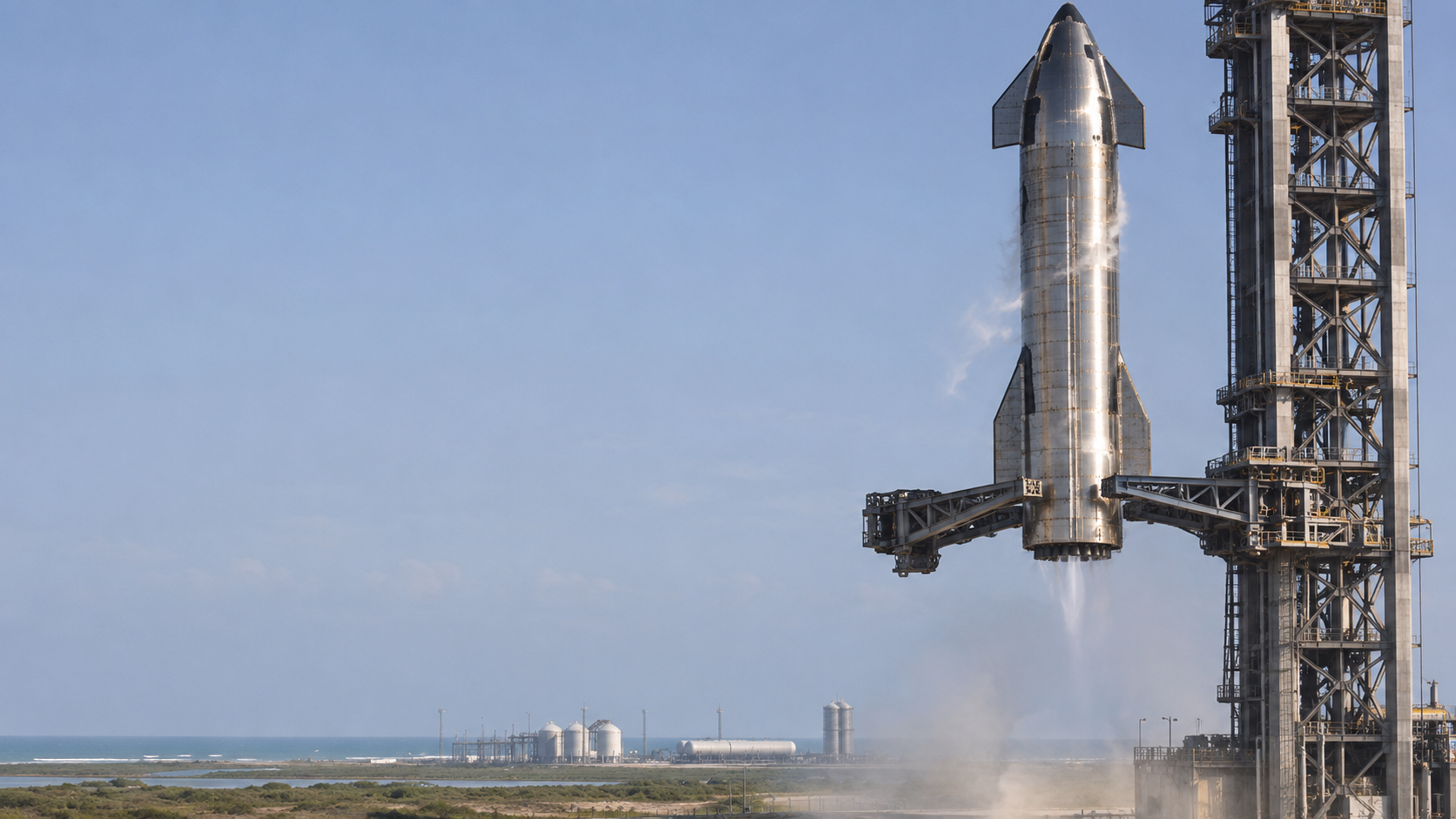
The “chopsticks” are large mechanical arms mounted on Starship’s launch tower. They are designed to capture returning launch hardware near the tower instead of allowing it to land on a conventional pad or splash down in the ocean.
A tower catch requires precise coordination between the vehicle and ground system. The returning stage must follow a controlled trajectory, maintain the correct attitude, and reach the capture zone at the right time. The arms must also move into position while absorbing the forces generated during contact.
This approach differs from traditional recovery methods. An ocean splashdown can protect a vehicle from a hard landing but exposes it to water and recovery operations. A landing pad requires landing legs, a prepared surface, and additional infrastructure. A tower catch aims to combine recovery and launch-site integration in one location.
The Flight 15 milestone therefore tests more than the vehicle. It also tests the tower, arms, sensors, software, safety procedures, and personnel coordination.
Flight 15 and earlier booster milestones
Flight 15 should not be confused with earlier Starship recovery demonstrations. Historical coverage of Starship Flight 5 described a successful catch of the Super Heavy booster by the launch tower’s chopsticks Source 9.
Super Heavy and the Starship upper stage follow different flight paths and experience different ascent, separation, reentry, thermal, and descent conditions. A successful booster catch is significant, but it does not automatically prove that the upper stage can be recovered in the same way.
The available Flight 15 source identifies the catch as the central milestone but does not provide a detailed mission profile or confirmed follow-up schedule Source 1. Claims about future missions should therefore be treated as program goals unless SpaceX or regulators confirm them.
Why the catch matters
The catch demonstrates progress toward recovering large launch stages close to the launch tower. It could eventually reduce hardware losses, simplify post-landing transportation, and give SpaceX more opportunities to inspect and reuse flight-proven vehicles.
The test also provides engineering data about:
- Guidance and navigation.
- Vehicle attitude during descent.
- Final-approach accuracy.
- Tower-arm movement and timing.
- Structural loads during contact.
- Sensors and control systems.
- Vehicle and ground-system coordination.
A successful catch can still reveal problems, including higher-than-expected loads, heat damage, deformation, software limitations, or maintenance requirements. The key question is whether the procedure can be performed safely and consistently.
The Immediate Next Step: Analyze the Flight Data
Inspect the vehicle and catch hardware
SpaceX will need to examine the recovered stage and the systems involved in the catch. Inspections should cover structural interfaces, catch points, the engine area, thermal protection, and control surfaces.
The chopsticks arms and launch tower will also require inspection. Engineers may assess contact surfaces, alignment mechanisms, sensors, actuators, and structural members. Ground-support equipment, fueling systems, and safety systems matter as well because a reusable rocket depends on the condition of the entire launch complex.
Telemetry cannot reveal every issue. Physical inspection may identify heat exposure, vibration damage, material deformation, loosened components, or wear that did not trigger an obvious warning.
Review flight performance
Post-flight analysis will likely examine the complete recovery sequence:
- Ascent performance.
- Stage separation.
- Reentry attitude.
- Descent trajectory.
- Final approach.
- Catch alignment.
- Contact loads.
- Vehicle and tower response after capture.
Engineers can compare actual performance with predicted models and update guidance software, recovery procedures, structural assumptions, and safety margins. A vehicle may arrive safely while using too much propellant, carrying excessive lateral motion, or imposing larger loads than expected.
Turn one success into a repeatable process
The post-flight assessment should answer three questions:
- Did the vehicle follow the intended trajectory?
- Did the vehicle and tower remain within safe operating margins?
- Can the procedure be repeated without major refurbishment?
Repeatability matters more than a single demonstration. A recovery system becomes operational only when it performs consistently across different flights, vehicle conditions, weather environments, and mission profiles.
More Flight Tests Will Come Before Routine Reuse
Test the catch under varied conditions
Future Starship flights may introduce controlled changes to recovery profiles, including different approach trajectories, vehicle configurations, fuel states, and mission demands. Testing under varied conditions will help identify the system’s limits.
A recovery method that works under one carefully managed profile may behave differently after a more energetic mission or a different reentry. No confirmed Flight 15 follow-up schedule is provided in the available source material, so mission numbers and dates should be verified through current SpaceX announcements, regulatory documents, or reputable technical reporting.
Validate upper-stage recovery
The Starship upper stage presents a separate engineering challenge from the Super Heavy booster. It travels farther, reenters under different conditions, and must manage substantial thermal and aerodynamic stresses before reaching the recovery area.
Upper-stage recovery requires confidence in:
- Reentry control.
- Thermal protection.
- Flap performance.
- Attitude control.
- Final-descent accuracy.
- Structural compatibility with the chopsticks.
- Recovery-zone safety.
A report citing comments attributed to Elon Musk said SpaceX planned to attempt an upper-stage catch as early as 2025 Source 7. That statement should be treated as a reported target, not a guaranteed schedule.
Even a successful upper-stage catch would not prove complete reusability. SpaceX would still need to inspect, refurbish, relaunch, and repeatedly operate the hardware.
Recover vehicles after useful missions
Recovery must eventually work after the vehicle performs its primary task. A reusable Starship should deliver a mission, return through the atmosphere, reach the intended recovery zone, and remain in condition for another flight without excessive refurbishment.
That progression could include payload delivery, longer missions, more demanding orbital trajectories, and other objectives. The economic value of recovery depends on what happens after landing or capture. Extensive rebuilding after every flight would limit the expected cost and cadence benefits.
The Launch Tower Must Become More Operational
The chopsticks system must tolerate repeated high-energy operations. SpaceX may assess alignment, arm movement, contact surfaces, tower loads, sensor readings, and control-system performance after each catch.
A successful catch does not mean every part of the system is ready for routine use. Repeated operations may expose wear, alignment drift, thermal effects, or maintenance requirements that are difficult to identify during a single test.
A reusable launch system also requires reliable turnaround procedures, including:
- Vehicle inspections.
- Engine checks.
- Thermal-protection assessments.
- Propellant-system preparation.
- Launch-site clearance.
- Recovery-arm testing.
- Safety reviews.
- Regulatory coordination.
The time required for these tasks will influence launch cadence. A vehicle that can technically fly again may still be operationally slow if inspections or ground preparations take too long.
Higher launch frequency could require additional production capacity, propellant logistics, maintenance areas, inspection facilities, and launch or recovery infrastructure. These are broader program considerations, not confirmed Flight 15 outcomes. Infrastructure must expand without reducing safety or overwhelming personnel, range coordination, environmental compliance, and site-maintenance systems.
Reusability Is the Real Test After the Catch
A recovered vehicle is not automatically a reusable vehicle. The full process includes:
- Recovery.
- Inspection.
- Refurbishment.
- Relight and launch preparation.
- Relaunch.
- Performance evaluation.
The most important result will be how much work the vehicle needs before its next mission. Repeated flights using the same booster or Starship would provide stronger evidence than recovering a new vehicle after each mission.
Important measurements include:
- Time between flights.
- Number of replaced components.
- Inspection workload.
- Engine reliability.
- Heat-shield condition.
- Ground labor.
- Launch-site downtime.
- Repair cost.
Operational reusability requires consistent performance across multiple flights. A system that works once but demands extensive reconstruction after every recovery would not deliver the same benefits as a rapid-turnaround vehicle.
SpaceX’s iterative testing can accelerate development when engineers capture useful data and apply it to the next vehicle. Safety margins, hardware inspections, and regulatory requirements must remain central as flight frequency increases.
What Future Starship Missions May Need to Demonstrate
The program must progress from recovery demonstrations to missions that test the full transportation system. Broader objectives may include:
- More reliable orbital insertion.
- Controlled reentry.
- Payload deployment.
- Extended time in space.
- Propellant-transfer demonstrations.
- Reuse after a useful mission.
These are program-level goals, not confirmed objectives for the next Starship flight.
Starship’s value also depends on reliable cargo handling, communications, tracking, deployment mechanisms, and customer integration. Commercial, civil, and exploration users will need predictable mission performance rather than a vehicle that remains only a test platform.
In-space propellant transfer is central to the most ambitious Starship missions. A lunar architecture could involve Earth launch, orbital refueling, transfer toward the Moon, lunar landing, and mission completion. The Flight 15 catch addresses only the recovery portion of that larger challenge. It does not demonstrate orbital propellant transfer, long-duration operations, or lunar-landing capability.
Why Starship’s Progress Matters to NASA and the Moon
NASA’s Artemis architecture has treated a Starship-derived vehicle as a potential lunar lander. That role requires a dependable transportation system, not only a recoverable booster.
Relevant capabilities include:
- Reliable launches.
- Safe stage recovery.
- Orbital propellant transfer.
- Long-duration operations.
- Lunar landing.
- Cargo and crew safety.
- Mission-specific navigation and communications.
Each capability creates a separate technical risk. A successful chopsticks catch can improve confidence in recovery operations, but it does not establish lunar-lander readiness.
Schedule claims also require careful interpretation. Company targets, government milestones, demonstrated capabilities, and actual mission readiness are different categories. Current NASA announcements and official SpaceX updates remain the best sources for schedule changes.
The Biggest Remaining Risks
Thermal protection and controlled reentry
The upper stage must survive intense atmospheric heating while maintaining the attitude required for controlled flight. Heat-shield durability, tile attachment, vehicle control, and aerodynamic stability remain critical.
The Flight 15 catch should not be treated as proof that all reentry risks have been resolved. Each successful flight can validate some assumptions while exposing others.
Engine and propulsion reliability
Engines affect every stage of the mission. Reliable starts, shutdowns, and relights are important for ascent, separation, descent, and recovery.
As flight frequency increases, engine reliability becomes even more important. Frequent operations require predictable inspections, manageable maintenance, and consistent performance across flight-proven hardware.
Catch-system safety
A misaligned or failed catch could damage the vehicle, tower, or surrounding infrastructure. Safety depends on accurate navigation, redundant monitoring, clear recovery zones, and procedures for handling approaches outside acceptable limits.
The system must protect both hardware and ground personnel, which may limit how quickly SpaceX can increase testing cadence.
Regulatory and environmental constraints
Launch frequency can also depend on regulatory approvals, environmental reviews, range availability, and safety requirements. Hardware readiness does not automatically create permission to launch.
How the Catch Could Change SpaceX’s Launch Strategy
A successful catch supports SpaceX’s long-term objective of recovering both major Starship stages. If the company can recover, inspect, and rapidly reuse the booster and upper stage, potential benefits include:
- Lower hardware loss.
- Faster launch preparation.
- More flight data.
- Higher launch frequency.
- Greater mission flexibility.
- Reduced dependence on newly manufactured flight hardware.
Those benefits depend on refurbishment requirements and repeat operations. Recovery alone does not establish a lower-cost launch system.
A reliable reusable heavy-lift system could affect large satellite deployment, space-station logistics, commercial cargo, deep-space missions, and national-security launch capacity. These effects remain conditional because the available sources do not establish Starship as a routine commercial launch system.
What Readers Should Watch Next
The most useful verified updates will concern:
- The condition of the recovered vehicle.
- The condition of the chopsticks and tower.
- Inspection findings.
- Engine performance.
- Reentry and descent data.
- Confirmed reflight plans.
- Payload or orbital mission objectives.
- Evidence of refurbishment and reuse.
Readers should monitor official SpaceX statements, NASA updates, regulatory notices, launch licenses, confirmed launch windows, hardware activity at Starbase, and reputable technical reporting. Unsourced social-media claims can spread quickly after a major test, so primary sources and established technical publications provide stronger evidence.
The key question is whether SpaceX merely repeats the catch or advances Starship toward harder missions, faster turnaround, flight-proven hardware reuse, payload delivery, and orbital refueling. That distinction separates a successful demonstration from an emerging transportation system.
Conclusion: The Catch Is a Milestone, Not the Destination
The Starship Flight 15 chopsticks catch demonstrates progress in SpaceX’s recovery strategy. It shows that the vehicle and tower can coordinate during a demanding recovery sequence, but it does not prove that Starship is operationally mature.
SpaceX must now analyze the flight, inspect the hardware, improve the tower system, test recovery under more demanding conditions, and determine how much refurbishment the recovered stage requires.
The company must also demonstrate repeat flights, useful payload delivery, reliable ground operations, orbital refueling, and the capabilities needed for lunar missions. A booster catch is one part of that process. Upper-stage recovery, full-system reuse, and mission reliability remain separate challenges.
Starship’s significance will ultimately be determined by what happens after Flight 15: whether the system can launch, recover, inspect, and fly again with increasing reliability. That repeatability—not a single spectacular catch—will determine what comes next for SpaceX’s Starship.